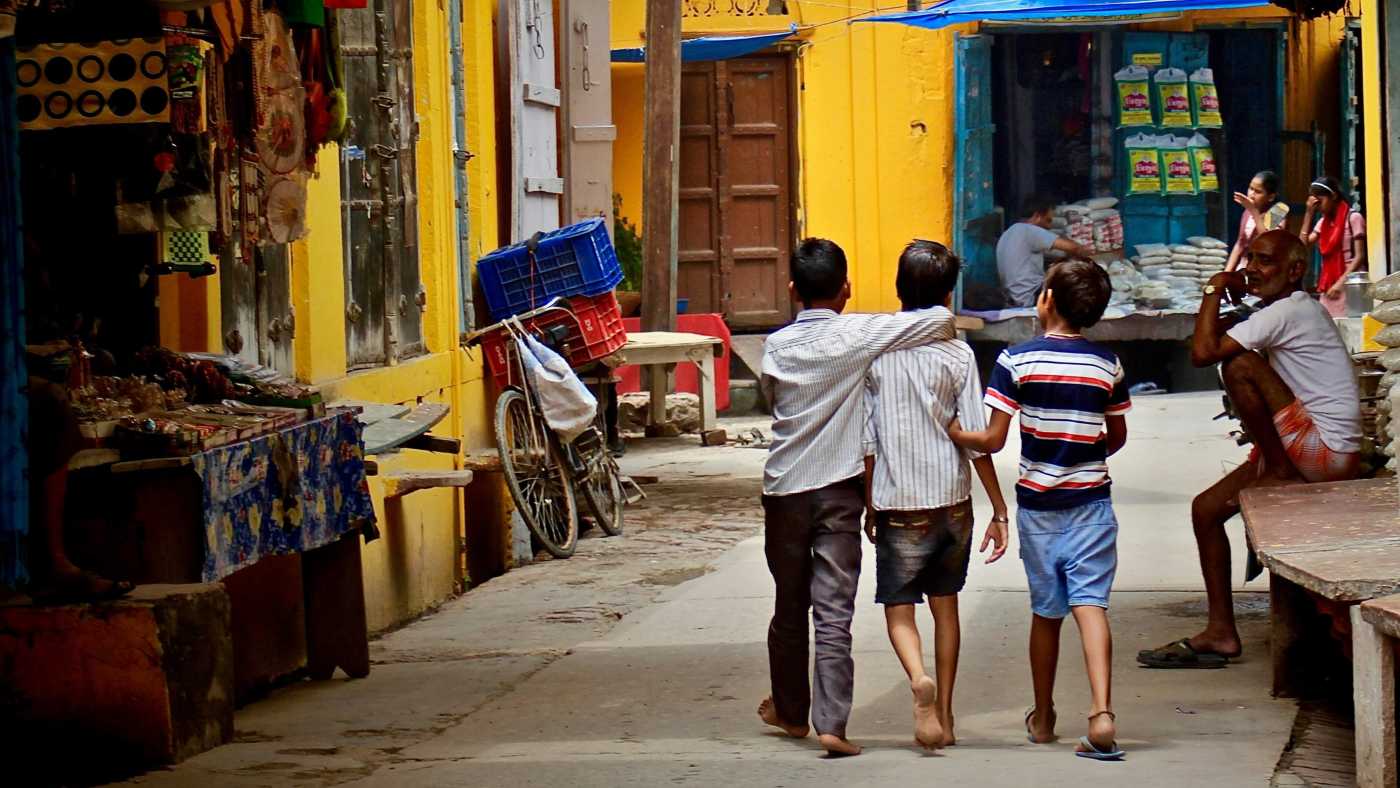
We did not think of ourselves as poor. We thought of ourselves as constrained. There is a difference. One describes what you lack. The other shapes how you learn to think.
Growing up in India, resources were limited, but aspiration was not. You learned early that wanting something and having access to it were not the same thing. You also learned that complaint was not a strategy. Adjustment was. Patience was. Endurance was.
Looking back, I can see that scarcity leaves more than financial marks. It shapes your relationship with risk, with effort, and with time itself. It can make you practical earlier than you should have to be. It can sharpen your awareness of tradeoffs. It can also create a persistent unease — the feeling that security is never quite permanent, and that progress must always be protected.
But scarcity is not noble by itself. It does not automatically produce character, wisdom, or resilience. Sometimes it simply exhausts people. Sometimes it narrows their choices and their confidence. What matters is what surrounds it: family, encouragement, discipline, example, education, and the small but powerful belief that effort can still matter.
In my case, those forces turned constraint into a kind of training. Not glamorous training. Not the kind anyone would choose if better options were available. But training nonetheless. It taught me to value preparation, to respect opportunity, and to understand that progress often comes in uneven increments rather than dramatic leaps.
Years later, in business and in life, I would see the same pattern repeat. Growth is rarely linear. Reinvention is rarely elegant. Most meaningful progress is built through adaptation, persistence, and repeated correction. The lesson was not new. I had seen an early version of it already.
That may be one of the quieter gifts of adversity. Not the adversity itself, but the habits it can leave behind when met with enough support and determination. You become slower to assume abundance. More careful with options. More aware that comfort is fragile and that momentum must be earned again and again.
At the same time, there is something important not to romanticize. The goal is not to glorify hardship or pretend it is a prerequisite for depth. It is not. A person can grow up with comfort and still develop discipline, empathy, and seriousness. Hardship is not a credential. It is simply one kind of teacher.
What matters, in the end, is whether the experience becomes useful — whether it deepens your understanding, strengthens your judgment, and helps you carry forward something worth passing on.
That is the part that interests me most now. Not the performance of struggle, but the practical residue of it. The values it leaves behind. The quiet recalibration of what matters. The ability to look at opportunity with both gratitude and realism.
Scarcity does not define a life. But it can shape its internal architecture. And sometimes, many years later, you realize that some of the instincts that helped you build, endure, and adapt were formed long before you had language for them.